Research
Modeling how genetic information translates into biological function
Our research aims to uncover how the information encoded in DNA is translated
into biological function and phenotypes. In particular, we investigate the post-transcriptional regulation of gene expression, with a particular interest in the processes that govern protein synthesis and folding.
To uncover the underlying regulatory mechanisms, we develop computational models,
including deep learning approaches, that integrate and leverage multi-omic and high-throughput datasets. This systems biology approach lets us dissect the complex regulatory processes underlying cellular function and disease.
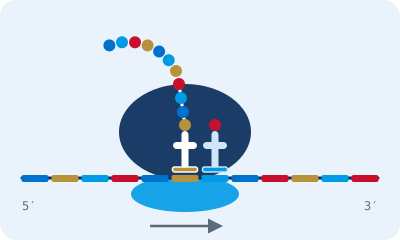
Regulation of protein synthesis
mRNA translation is regulated at many levels by mRNA sequence features and binding proteins, tRNA availability and the metabolic state of the cell, which determine the transit of ribosomes along mRNAs. We study how this process is regulated across cellular contexts and conditions.
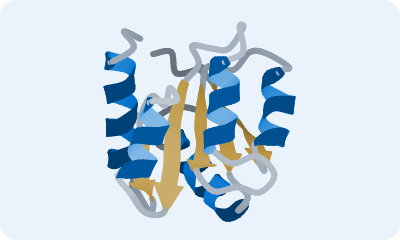
Protein folding and structural dynamics
Upon translation, proteins undergo folding that is essential for their function, and this structure can change rapidly in response to cellular state. We develop models on high-throughput data of protein structural dynamics to understand this process and how misfolding can lead to disease.
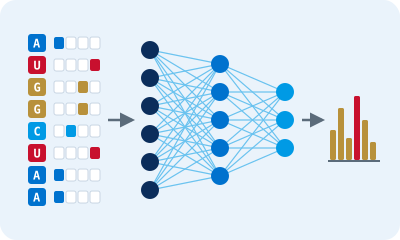
Deep learning for regulatory genomics
Deep learning models can now be trained on large-scale datasets and accurately predict the regulation of gene expression. We want to interpret these models to understand the sequencea and structural features that control gene expression. These models can predict the impact of genetic variants and propose new gene designs.
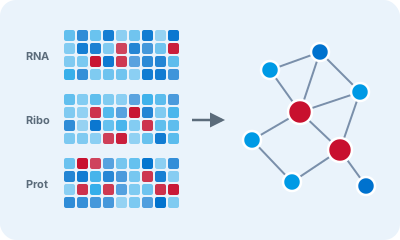
Multi-omics systems biology
Multiple regulatory processes control gene expression, which need to be jointly integrated to understand biological function. We use multi-omics datasets (RNA-seq, ribosome profiling, proteomics, metabolomics) to identify the regulatory connections and interactions that control gene expression.